Completed Event: Football at Michigan on September 12, 2026 , Loss , 10, to, 17
Final

Football
10
at Michigan
17


.png&width=40&height=40&type=webp)


November 25, 2015 | Football
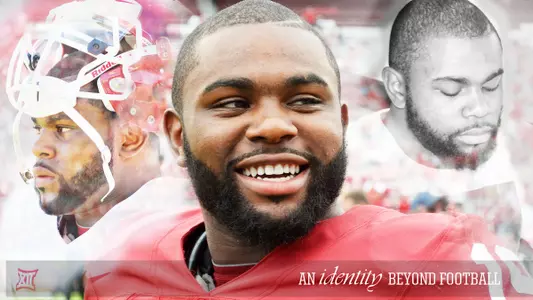
Typical talk about football players has been made up of numbers and all of the action that happens between hash marks, sidelines and end zones. However, since senior linebacker Eric Striker arrived in Norman four years ago from Tampa, Fla., he has helped change the conversation.
While Striker has been praised for his on-field prowess and stat lines, including the Oklahoma program record for sacks by a linebacker in a career (23) and season (9) and fifth most all-time overall, his time away from the gridiron has been equally, if not more, defining.
Striker is a lot of things to a lot of people. As a Sooner, he has been declared OU football's emotional leader, a ferocious pass rusher, the "Energizer Bunny," a great media sound bite and a prank puller. He is all those things and yet so much more.

Striker entertains his teammates and the participants at the 2015 Women's Football Tee hosted by head football coach Bob Stoops.
He is a self-proclaimed "man of the people," an identity he developed because of the influence of Muhammad Ali, his inspiration. And like Ali, he holds no punches, verbally speaking. Striker is outspoken, charismatic and humorous.
"I'm Tampa's Ambassador," Striker said during a recent post-practice media session, which was greeted with laughter by the gathered media. "I didn't like y'all because I didn't think the media were decent people. I thought y'all were evil. I started to feel comfortable with this, though, the spring before my junior year."
His sincerity and transparency, along with his quick wit and jesting criticism of reporters, has helped him become one of the media's favorite interviewees. He often strays from the subject of football during interviews to open up about music, including Adele's "Hello", classwork and issues surrounding race relations.

Striker talks about memorable moments at OU with members of the media during a post-practice media session.
"He's busted me twice for my wardrobe, but I don't take it personal," said Berry Tramel, a columnist for The Oklahoman who has covered Sooner football since 1979. "He's a throwback because you used to see more athletes like him.
"It's refreshing because he isn't afraid to go against the company line. He doesn't mind getting emotional and intellectual."
Striker's unique and often colorful commentary has transformed the dynamics of the OU media room. A large scrum of reporters often wait after practice and after all other interviews are done just to hear what new subject Striker will bring up. He's referenced historic political figures, including his favorite president, Franklin Delano Roosevelt, which is maybe expected from a political science major such as Striker, but less so during a football press conference.
His passion for history, however, began long before he enrolled at OU.
"My momma had like a library of books when I was growing up with just all kinds of African-American books about history and just good books overall," the 22-year-old Striker said. "My interest started there and continued going. I feel like what's better than knowing your history?

A young Eric Striker with siblings and parents. Much of his love of history and music began at an early age.
"I'm big on black history," he continued. "So many people came before me that, if it wasn't for them doing what they did during Civil Rights, I wouldn't be in the position I am in. I really pay homage to them and all of the athletes who gave up their sports and scholarships to march for black people's liberty. I feel like getting an education and being successful on the field that I am paying them back. When [those that came before me] see me speak out about things, they're proud of that and it's ultimately what drives me."
Striker's ability to significantly affect his peers and his environment in present time has surprised some. However, it is nothing out of the ordinary for those who know him best: his family.
Striker's infectious laugh and congenial personality are something with which his parents are familiar. His leadership and individuality may be unique for collegiate athletics, but it was apparent throughout his youth and adolescent years.
"He was always different and he never followed the crowd," his father, Eric Striker, said. "He was always himself. He always had his own opinions and his own voice. It was funny because he never cared when everybody was wearing Jordans and all that. He was more excited about Muhammad Ali and what he had to say."

Striker has a passion for reading and has been inspired by the life of Muhammad Ali.
His father, who the younger Striker has looked up to his entire life, is to credit for his love of music, much of his sense of humor and even his cologne.
"A lot of people describe him as an older soul, not just because he listened to The Temptations," the elder Striker said of his son, who memorized all of The Temptations dances as a child. "But also his understanding of people. He does love music and I always used to play music when I was with my sons whether it was rap, R&B. I love all music, too."
Those connections still exist between the two.
"You realize your father's your super hero around high school," the younger Striker said. "I look back on it and realized my brothers and I really wanted to be like him. We talk like him now and we dress like him. Even the cologne I have now is the same as his.
"He's a great dude and he's been there for us. He's been there my whole life. He's shared his knowledge with us and we've had all of the talks that a father and son should have."
Striker and his mother, Lia Skelton, have a similar bond.

Striker and mother, Lia Skelton, stay connected
through music and often share playlists.
"We share music playlists and I'd be in the gym and a Temptations song would come on and it'd make me tear up because I would just think, 'Who is this kid? He's just so different,'" said Skelton, who is currently enrolled in Western Michigan-Cooley Law School in Tampa. "I'm so proud of the person he's forming into. He has a lot of admirable qualities that I see and love in him. There are pieces of me in him that I definitely see, but EJ's leadership is just natural."
EJ, as his family calls him, stands for Eric Joshua, not Eric Junior. Joshua was the young cousin of his mother's friend who died from brain cancer a month before Striker was born.
"I think that this whole time that [Joshua's] kept a watch over my child," Skelton said. "Because everything has happened the way it's supposed to for EJ."
For the younger Striker, there is a deeper story behind much of what he represents. His jersey number is symbolic for his approach to life.
"My freshman year in high school I was a receiver at first and that was the number given to me," he explained. "I liked it just because it was rare and I felt like 19 was not a number that's loud.
"My sophomore year I changed to linebacker and my number to 54. I wore it in the spring game and it was just this big jersey and I didn't have a good game. I didn't have a sack or anything. Our DB coach at the time was just like, 'I know why you played like that, because that No. 54, you need to go back to 19.' So I went back to 19 and I didn't have a problem going back to it because I knew I could make it big."

Striker sported the No. 19 jersey since his freshman year at Armwood High School. He believes wearing 19 helped his performance and his team win the 2011 6A Florida High School State Championship in Orlando, Fla.
He did just that, opening this season on the watch list for the Bednarik, Butkus, Rotary Lombardi and Nagurski Awards. Now easily recognized by his jersey, Striker has made sure that it did not become his only identity. That mission began during his junior year at Armwood High School, when he had growing concerns that many of his peers looked only to football to succeed.
"I didn't like how so many people just relied on one thing," he said. "I see that with so many athletes -- this is all they're relying on. My junior year in high school, I was just like, 'This football thing can't be life forever.'
"I love the game, I got passion for the game and I play it to the fullest. Football is a dream and I feel like I should carry that out. But there are some other things that I want to do in this life, as well."
That's another lesson emphasized by his parents.
"I tell him all of the time that he's perfect whether he picks up another football or not," Skelton said. "He loves football, but I would say music is probably more of his first love, and reading and gaining knowledge. He's just really well-rounded."
His father agrees.

Parents Eric Striker and Lia Skelton emphasized the importance of education to their son throughout his life. Striker graduated from Armwood High School in Tampa, Fla., in 2012.
"Even when he got his scholarship to go to Oklahoma, his mom and I always told him, 'Look, you can get hurt or anything so make sure you get your education," said the father. "Football never really defined him; he is just good at it."
Recognizing the platform he has while playing for a prestigious program like OU, the younger Striker is conscientious about the message he sends to younger African-Americans who, like many of his collegiate peers from many ethnic backgrounds, are inspired by him.
"One time I thought about not playing at the next level," he said. "I thought about that because of the message that it would send to the community and young African-Americans like, 'Look, you don't always have to just rely on this football thing.
"I like to help young kids coming up and try to inspire them not to be that statistic. Plus there are so many other African-Americans in this sport who are good, that I felt like if I just picked up and left, it would send a good message. I go back to Tampa and talk to the kids so they understand all of that because I know they look up to me."
Returning home is a humbling experience at times for Striker.
"I remember in little league my coach was like, 'Look around. Half of y'all are going to be in prison or back out here in these streets.' And it's true," Striker said. "You don't have to be that. I'm not too far from that because I was there. All it took was some self-discipline and focus to push me out of that. I do that to inspire and show them I was a young buck from Tampa out here just like they are. A little snotty-nosed kid, running around."

Striker, senior center Ty Darlington, and junior thrower Jenny Carmichael spoke with the OU's Campus Activities Council (CAC) about leadership development and connecting with high school student-athletes to promote holistic development through the CAC's High School Leadership Conference.
Though he has considered stepping away from the athletic spotlight for what seems like the greater good, sports has been a true passion for the linebacker. In fact, it was in 2004 that an 11-year-old Striker became enamored with the OU football program.
"The first time I saw Oklahoma [play football] must've been in 2004," he recalled. "I was a little kid and my dad had a game on. I remember hearing that 'OOOO- U' on the kickoff and thought it was cool. That was my first memory.
"I told my coach my freshman year that's where I wanted to go -- OU," he added, laughing. "I told him from the jump. I didn't even have any film yet."
The Sooner football captain has not had a problem fitting into or standing out in any environment, including on the football field, on the team's airplane where he's been an honorary pilot, or even at a dinner with OU President David Boren. Intrigued by the younger Striker's zeal for FDR, the OU administration extended him an invitation to the President's Associates dinner, where he sat alongside athletics director and vice president Joe Castiglione, one table away from President Boren.

Striker stands with OU president David L. Boren (left) and vice president/athletics director Joe Castiglione at the President's Associates dinner in October.
His teammates admire his ability to adapt to a diverse audience.
"He's the same with everybody and I don't think he treats anybody any differently no matter who you are," said roommate Zack Sanchez, a redshirt junior cornerback. "He's easy to talk to and always joking around. People really want to be around him.
"I don't think there's going to be another guy like 'Strike' to come through here, honestly. He's unique. He brings an edge and an energy that are hard to match. I don't even know what to call it -- an aura? But he brings a positive energy to the university that we haven't had in a long time."
Head football coach Bob Stoops is also uncertain about the impact that losing a soon-to-be graduating Striker will have on the atmosphere of the football program.

Redshirt junior cornerback Zack Sanchez gets some love from Striker after a big play during a game. Sanchez says the energy that Striker brings is why people want to be around his roommate.
"I don't know what it'll be like because every day it's energy, it's excitement, it's enthusiasm," Stoops said. "He keeps everybody going. It'll be hard without him, honestly. He's been a great role model for our players."
Striker has not only been a role model for the team, but a vocal leader in speaking out against racism endured by black student-athletes and students on college campuses. His public response to a Sigma Alpha Epsilon (SAE) fraternity video during the spring of 2015 shed light on racial tensions throughout the country.
The event was similar to what Striker had once only read in history books. While he admits that it was a difficult situation to navigate, his openness about the realities of racism led to a national conversation. An article on ESPN.com by Edward Aschoff and Adam Rittenberg entitled Race and college football: The conversation Eric Striker started delineates the power of a young Striker's words and actions.

Instead of participating in football activities during a 2015 spring practice, the OU football team silently protested on Owen Field to promote racial unity on the campus. Striker stands in the front (far right) with fellow teammates (from left) Sterling Shepard, Ty Darlington, Zack Sanchez, Charles Tapper, Trevor Knight and head coach Bob Stoops (center).
Words and actions of which he and his parents are most proud.
"Getting through that SAE stuff is probably the most memorable moment from being at OU," Striker told a group of reporters the week leading up to his final home game as a Sooner. "If...the football team is the one that has the voice, we need to be the ones to step up. I just want other teams and people to do that and to step up and not be afraid. Do not let racist stuff happen or let it pass by."

"I represent a lot being an athlete, period. But when the whole SAE thing happened, people look at you to lead and I'm fine with that. I'm all about doing the right thing." - Eric Striker
"I was very proud of him with how he handled the SAE-fraternity issue," Skelton said. "But what made me proud was when I was reading an ESPN article and they seemed to give him credit for starting the conversation on race in college football.
"As a mom you want to raise your sons to be great men," she added. "I have that, not just in EJ, but my older two sons as well."
His father agrees.
"The thing about EJ is he speaks from his heart," his father said. "I see in the interviews how they said they'd miss him when he was gone because they've never had a player who was like him. It was the same way when he left Armwood. The coaches said they would miss his personality. He picks everyone up."
Expect that to continue even when his setting changes because the senior linebacker does not plan on changing at all.

Eric Striker poses for a "selfie" with football senior captain Ty Darlington and a member of OU's Campus Activities Council after a leadership discussion.
"I'm a young boy from Tampa who came to Oklahoma and did a good job and won the people over," Striker said. "I gotta give credit to hip-hop for helping me understand people and Muhammad Ali. Just watching and reading about him, he was not afraid to just be who he is and make statements and ultimately step up for his people."
As the season and his career close, a few more quarterbacks will likely remember the force of the 222-pound Striker on the field. But the OU community will remember his campus-wide impact much longer.