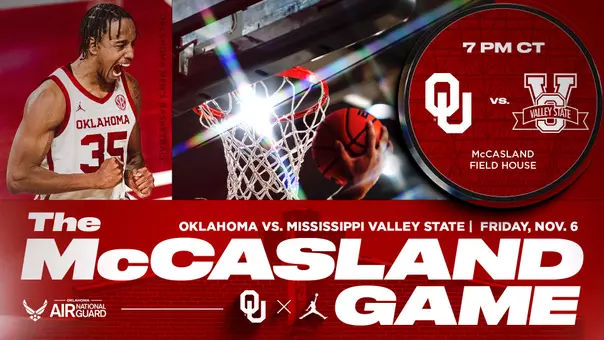
Upcoming Event: Men's Basketball versus East Texas A&M on November 2, 2026 at 7 PM
7 PM
Men's Basketball
vs East Texas A&M


August 01, 2007 | Men's Basketball
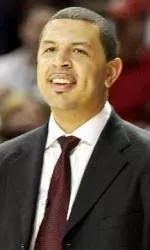
NORMAN, Okla. - University of Oklahoma men's basketball coach Jeff Capel recently participated in a Q&A with CSTV.com's Steve Brauntuch.
In the interview, Capel, who is beginning his second season at OU, talks about his first year in Norman, explains how the Sooner football team helps his basketball program, discusses his first head coaching job at VCU and reminisces about his days as a collegian at Duke:
Basketball runs through the blood of Jeff Capel's family. His father, Jeff Capel II, is a lifelong coach. His brother led North Carolina to the Final Four in 2000. And Jeff has some pretty good basketball memories of his own, including a half court overtime buzzer beater against North Carolina that has gone down as one of the greatest shots in NCAA history. Capel has also carved out a niche for himself on the bench. Although he left before the 2006-2007 season, he was the architect of the VCU team that upset his alma mater Duke in the first round of this year's NCAA Tournament.
Now, Capel enters his second season as the head man at Oklahoma, and he's not satisfied with how his team performed last year. Winning, after all, is in the Capel bloodline, so missing the postseason for the first time in over two decades in Norman did not sit well. Still, Capel is optimistic about his team's prospects for the upcoming season. He spoke about the challenge ahead of him, his years with Coach K and what it means to be a Duke legend.
SB: How would you evaluate your first season at Oklahoma?
JC: I thought we laid a pretty good foundation for how hard we want to play. I thought our kids gave really good effort this past season under some tough circumstances. None of these guys I recruited, so I can imagine how difficult it is as a player, especially guys that are older and have been in the program, once they get there and get into a rhythm, knowing the style and knowing the system. Then all of a sudden that's changed. So I thought our guys did a really good job playing hard and competing night in and night out. I thought we laid a very good foundation for what we want to try to do eventually and for how hard we want to play. Obviously there are some improvements that we're going to have to make, and we'll make those through our skill development program that we do. I thought overall we didn't win as many games as we'd like to. We certainly didn't get to the postseason and that will always be a goal of ours. But I really liked how our guys competed.
SB: When you first took the Oklahoma job, you had a couple of incoming players decommit and head to other schools. Did you take it personally at all when some players decided they didn't want to play for you in Norman?
JC: You know, I think you're only human to take it somewhat personally. Obviously, as a coach, I have had success at VCU, and Oklahoma came calling on me. It wasn't like I hunted out Oklahoma - they came calling on me. So certainly, a very, very small part of me did take it personally. But at the same time, being a former player, I could understand those guys maybe wanting to explore other options just because they chose to play for a certain coach. You'd like to think that everyone chooses where they want to go to school. That every basketball player simply chooses because of the university. In some cases, that's true. It's a dual thing. It's the university and it's the coaching staff. But a lot of times, it is the coaching staff or the head coach and a relationship that's developed there. So from that standpoint, I did understand it. But nonetheless, it was hard. It was a tough blow, since those guys could have helped us.
SB: Do you feel in some ways that Oklahoma basketball plays second fiddle to Oklahoma football? Do you feel the basketball program will always be an afterthought there?
JC: I don't think it's an afterthought. Certainly, football is No. 1 here. I understand that. I embrace that. I think that helps us. Number one, it gets our name out there. It gets our brand out there. Everyone throughout the country knows about the University of Oklahoma and a big part of it is the success of our football program. So we're able to get in doors because people know who OU is because of football. I think at times people don't realize the success our basketball program has had throughout its history for whatever reason. I don't know if it's just because football is so prominent here. But I think our fans do. I think they appreciate and really have a lot of respect and a lot of pride in the success that this basketball program has had over the years. I know one of the things that I look at is, if you look at the landscape of college basketball, you look at the defending champions, which is Florida. And Florida is and always will be a football school. You look at the finals in the NCAA last year, and you look at a program like Ohio State. It is and always will be a football school. You look at the success that Bruce Pearl has had at Tennessee. Tennessee is and always will be a football school. And you can go on and on - Texas, Michigan, things like that. It's not like it can't be done here or it hasn't been done here. I think any time you have an opportunity where you can put 90,000 people in a stadium, rabid Sooner fans in a stadium on a Saturday, I think that really helps each athletic program that you have on campus.
SB: VCU got a lot of attention last year and had a lot of success with a team that was really built by you. Was it hard for you to watch from afar as the team went into the NCAA Tournament?
JC: No. It was not hard at all. Maybe it would have been hard if I was fired. But you know what? I left VCU on great terms. It was a very difficult decision for me to leave, harder than most people realize, because number one, it's a place that gave me a chance. It's a place that believed in me and people that believed in me when it was very unpopular to do so. They believed in a 27-year-old young man. And those are kids that came to VCU because they wanted to play for me and wanted to be part of what we were building. They're incredible young men there. And so that's why it wasn't very difficult. Because I left on great terms, I was very happy for their success. I was actually cheering for them throughout the year. I kept in touch with some of the players and spoke to Anthony [Grant] a couple of times - I still have friends there. VCU will always be a big part of my life - that program, the university, the city of Richmond. We had some incredible, incredible people there and developed some friendships and relationships that will last for the rest of our lives.
SB: Now that you've seen it from both sides, do you think it's harder to win in college basketball at a non-BCS conference school than it is to win at a BCS conference school?
JC: I think it is hard, period, at each level. It doesn't matter. Basketball is basketball. When I took the job here, talking to Kelvin Sampson for a long time periodically before the season started, that's the one thing that he said. And I talked to Bruce Pearl one time over the summer before my first year about making the transition from a [non-BCS] school to a BCS conference school. And the one thing they said was, "you can coach. And if you can coach, you can coach anywhere." We've certainly got some good coaches in this league. But I'll tell you what - there are some really, really good coaches in the CAA as well. So I think the landscape of college basketball has changed, period. And because of that, I think it's very difficult to win. That's why I marvel at the consistency of certain programs throughout the country.
You know, you look at what Oklahoma did - 25 straight years in the postseason before last season. That's a testament to Kelvin Sampson, to Billy Tubbs and to all the student athletes that came here that could have joined other programs throughout the country. People don't realize that Oklahoma had the longest postseason streak of any team throughout the country before last year. That's a testament to the commitment that's made to men's basketball here. And so I think it's difficult to win at any level. I think you have to have a commitment from the university. And we have that here at the University of Oklahoma. You have to have really good players, and I think you have to recruit character. You have to recruit guys that are talented and guys that want to be a part of something that's bigger than them. We were able to do that at VCU and that's why we were successful. Now Anthony has come in and taken it to another level, and hopefully we're able to do the same thing here at OU.
SB: You were an assistant to your father at Old Dominion at the beginning of your coaching career. How would you compare your coaching style to his coaching style?
JC: Obviously, there are some similarities. I grew up with a coach. My dad has always been my hero. He's the guy I've always wanted to be like. And I was very fortunate and very blessed as a kid growing up to have my hero at home. I didn't have to look on TV. I had one that I could talk to, that I could touch, that I could put my arms around any time I wanted to. And so my dad has really influenced my life, not just my coaching style, but my life. I've been very fortunate also as a player and as a coach to be around some really powerful and dynamic coaches and some great men. And it started like I said with my dad and then with my high school coach Ron Miller at South View Senior High School. He was and is a great coach and an even better man, and someone who is very dear to me to this day. And I had a chance to play for arguably one of the best coaches in the history of our sport in Coach K in college. But then the assistant coaches we had - Tommy Amaker, Quin Snyder, Mike Brey, Tim O'Toole - who all went on to be head coaches. I was very fortunate and I learned so much from them and as an assistant working for my dad.
And then as an assistant, probably one of the best things ever to happen to me was being an assistant to Mack McCarthy in my first year at VCU. Coach Mack is a really good coach. He's a brilliant basketball mind. I loved working for him, and I'll always have a big place in my heart for him because he gave me a chance when I didn't have a job. And so all of these people have influenced me, not just the ones that I've had the opportunity to work for or not just my dad. I've been influenced by everyone, really, throughout the coaching profession - John Thompson, John Chaney, Nolan Richardson, Tubby Smith, guys like that who kind of paved the way for a young, black coach like myself and show that you can have success. And I remember when I was little looking at John Thompson winning the national championship and the success that he had at Georgetown. Looking at Nolan Richardson - I didn't like him in 1994 when they beat us in the finals, but even the success that he had. So I've been very fortunate to be part of this profession and to have a chance, have an opportunity to impact young people.
SB: Do you recognize anything specifically that you have picked up from Mike Krzyzewski? Can you point to anything in your style that you can say is clearly something you learned or borrowed from Coach K?
JC: Well, you know what, I learned so much from Coach. Obviously, when I was there as a player, I soaked everything in that he tried to teach us. I was one of those guys and I tell people, I've believed in him since I was a 17-year-old junior in high school. That's when I committed to Duke, and from that time, I believe in Coach K. And I've leaned on him, and now our relationship has taken a different turn. It's more of friends now. Obviously, he's a mentor to me. The thing that I especially admire more now that I'm a head coach is just the consistency that he has been able to accomplish at Duke. And now as a head coach, I'm able to understand and really appreciate how hard he works. I've marveled that when I was in school, he never had an off day. Every day he showed up, whether it was a practice or film session, he was on top of his game. He had energy, he had passion and he shared that with us. So just really understanding how hard you have to work, and also having the pleasure and tremendous opportunity to go back to Duke. Coach K created a position for me, a graduate position, so I had a chance to be in meetings with Coach K and his staff and got to see the behind-the-scenes of how things work. That was probably the first thing I did in coaching. That was before I went and started working for my dad. That was two years before that. He's another guy that has really influenced my life - not just influenced me as a coach, but really influenced me as a man.
SB: There's a lot of talk about Duke backlash across the country. Did you feel that at all as a player when you were there?
JC: You still feel it now. It's just something that's there, and I think it's there because of the success that Duke has had and because of the exposure that the Duke basketball program receives. You're on TV all the time. You have a coach that some people may look at as the face of college basketball. And the thing that I've learned just throughout life - not just through basketball, not through Duke - is that there's jealousy. There's jealousy, and jealousy leads to resentment. And I think that's what you have with the Duke basketball program. Sure, I felt it as a player, and when I went to Duke, they were coming off back-to-back national championships. We played for a national championship our freshman year. So you're talking about three national championship games, three Final Fours in four years. Obviously Duke was kind of the hot thing then. And it's kind of stood the test of time. You had one down year, which was my sophomore year. But it does exist. That's just the way it is, and we don't lose sleep over it. I can tell you that. My former teammates and I don't lose sleep over it. We know the people that have our back and the friendships that we have, whether it's at Duke or outside of Duke. But it is something that does exist.
SB: Take me back to the half court shot you hit against North Carolina in overtime in 1995. What was going through your mind when you put the ball up from the midcourt line?
JC: Well, the first thing that was going through was obviously Serge Zwikker had to miss those free throws. And once he missed the second one, I knew how much time was on the clock, and my thought was just to try to get to a spot and try to get to at least half court. I knew I had plenty of time. The thing that I was looking for was how Carolina was going to pressure in the backcourt. And I knew they probably weren't, because they had no one on the free throw line. They had no one up there. We were the only ones up there. So once I got it, I was thinking, okay, get to a spot. I knew exactly how many dribbles that I was going to be able to take. And once I was able to get to that spot, I was able to let it go. And when I let it go, I knew it was good. I mean, it felt good. I shouldn't say I knew it was good. But it felt good as soon as I let it go.
SB: Better Duke moment - your shot against North Carolina, or Christian Laettner's shot against Kentucky in 1992?
JC: You gotta go with Laettner. You have to because they won the game. Now, if we would have won that game, you know, perhaps I would have felt better about it. But just the history of that shot that Christian Laettner hit, you know. It sent Duke to the Final Four and then they won back-to-back and became the first team since UCLA to win back-to-back. I think it's the best college basketball game ever played. You have all of those scenarios there and the magnitude of it, going to the Final Four. You look at all the pros that were on the floor. And the one thing people don't realize is, you talk about players now playing the perfect game - well, Laettner kind of did that game. He was 10-for-10 from the floor and 10-for-10 from the free throw line, and he hit the game-winning shot in dramatic fashion. So you've got to go with Laettner's shot. You have to.